A loft conversion is one of the smartest ways to add proper living space to a home in Christchurch without losing a single inch of garden. We have converted lofts across the town and the surrounding villages, and the same questions come up time and again: will my roof work, how long does it take, and what will living through it actually be like? This guide answers all of that from real experience on the tools.
Why Christchurch homes suit loft conversions
Christchurch has a good mix of housing stock, from post-war semis and 1960s detached homes near the town centre to older properties closer to the quay. Many of these have generous roof voids that are sitting empty, used for nothing more than storing boxes and the odd suitcase.
With the price of moving and the strong demand for family space locally, converting the loft usually makes far more sense than relocating. You keep your postcode, your school catchment and your neighbours, and you gain a bedroom, a home office or a quiet retreat under the eaves.
The coastal setting matters too. Properties nearer the water can command lovely views from a new dormer or roof window, and a well-planned conversion can turn an unused roof into the best room in the house.
Key takeaway: Most Christchurch homes have more usable roof space than owners realise, and a loft conversion adds bedrooms and value without touching the footprint of the property.
The main types of loft conversion
Not every loft is the same, and the right conversion depends on your roof shape, your budget of space and how you want to use the room. Here are the options we fit most often.
Roof light conversions
The simplest type. We keep the existing roof shape and add windows that sit flush with the slope, then strengthen the floor, add stairs and finish the space inside. This works brilliantly where you already have plenty of head height. It is the least disruptive option and rarely troubles the planners.
Dormer conversions
A dormer projects out from the roof slope to create flat ceilings and full standing height. It is by far the most popular choice for Christchurch semis and terraces because it turns a cramped void into a genuinely usable room. A rear dormer is often the sweet spot: plenty of extra space with a low impact on the front of the house.
Hip to gable conversions
Many detached and semi-detached homes in the area have hipped roofs, where the end slopes inwards. A hip to gable conversion builds that sloping end up into a vertical gable wall, unlocking a much larger internal volume. Pair it with a rear dormer and you can create a very spacious main bedroom with an en-suite.
Mansard conversions
A mansard reshapes almost the entire roof to create a near-vertical rear wall and a large flat area of space. It gives the most room of any type but involves more structural work, so it tends to suit period properties or homes where you want to maximise every possible metre.
Is your loft suitable? What we check first
Before anything else, we look at head height. As a rule of thumb, you want a decent amount of clear height at the ridge, measured from the existing ceiling joists to the underside of the ridge board. If the height is tight, that does not always rule a conversion out, but it may point you towards a dormer or a lowered ceiling below.
We also assess:
- Roof structure. Traditional cut roofs with rafters and purlins are usually straightforward to open up. Modern trussed roofs, common in newer estates, need more engineering because the trusses are load-bearing and cannot simply be cut away.
- Roof pitch. A steeper pitch generally gives more usable floor area for a given footprint.
- Where the stairs will go. This is the single most overlooked issue. The new staircase has to land somewhere sensible on the floor below, and it needs proper head height at the top. We plan this early because it often shapes the whole design.
- Water tanks, chimneys and services. These may need relocating or working around.
If you are weighing up a loft against other ways to extend, our comparison of a rear extension vs side extension is worth a read alongside this guide.
Planning permission and building regulations
Good news for many homeowners: a large number of loft conversions fall under permitted development, meaning you may not need full planning permission at all. There are limits on volume, on how the roof looks from the highway and on materials, and homes in conservation areas or with an Article 4 direction have tighter rules.
We always confirm the position for your specific property rather than assuming. For a detailed local breakdown, see our guide on whether you need planning permission for a loft conversion in Dorset.
Building regulations are separate and apply to every conversion regardless of planning. They cover structure, fire safety, insulation, stairs and escape windows. This is where a good builder earns their keep, because getting fire protection and staircase design right is not negotiable and inspectors will check it.
What the build actually involves
Here is roughly how a typical dormer conversion runs on site, so you know what to expect.
Design and structure
We start with measured drawings and a structural engineer's calculations. Steel beams usually go in to carry the new floor and the roof loads, and these are craned or manoeuvred in and bolted into position. Getting the steels right is the backbone of the whole job.
Opening up and framing
Once the structure is in, we form the new floor, build out the dormer or gable and make the roof weathertight. We aim to keep the house sealed against the weather as quickly as possible, especially given how quickly conditions change on this stretch of coast.
First fix
This is the stage where electrics, plumbing, and any heating pipework are run before walls are closed up. If you are adding an en-suite, the pipework and drainage routes are planned here.
Insulation, plasterboard and second fix
We insulate to current standards, board out, plaster and then move to second fix: sockets, switches, radiators, sanitaryware and the staircase balustrade. As carpenters at heart, this is where we take real pride, in the joinery, the skirtings, the doors and the finish.
Decoration and sign-off
Final decoration goes on, the building inspector signs off the completed work, and you get your completion certificate. That certificate matters when you come to sell, so never skip it.
How long does a loft conversion take?
Every project differs, but a straightforward dormer conversion typically runs over a period of weeks rather than months. Hip to gable and mansard jobs take longer because of the extra structural work. Weather, material lead times and the complexity of the design all play a part.
We give a realistic programme at the outset and keep you updated as we go. We would always rather set an honest timeline and hold to it than promise something we cannot deliver.
Living through the work
A loft conversion is generally kinder to live through than a full extension or renovation. Most of the noisy, dusty structural work happens up in the roof, and because access is often from a landing, we can keep the rest of the house running.
We protect landings and stairs, sheet up work areas and clean down at the end of each day. Scaffolding goes up outside for the duration, which does affect the look of your home for a while, but it is temporary. Good communication makes the whole thing far smoother, which is one of the reasons we suggest reading our questions to ask before hiring a builder before you commit to anyone.
Getting the design right
The best loft conversions feel like they were always part of the house. A few things we always think about:
- Natural light. Roof windows and dormer glazing transform how a loft feels. We position them to catch light through the day and, where possible, to frame a view.
- Storage. The eaves are dead space unless you use them. Built-in cupboards and drawers under the slopes are a brilliant use of that awkward low area, and as joiners this is something we love making.
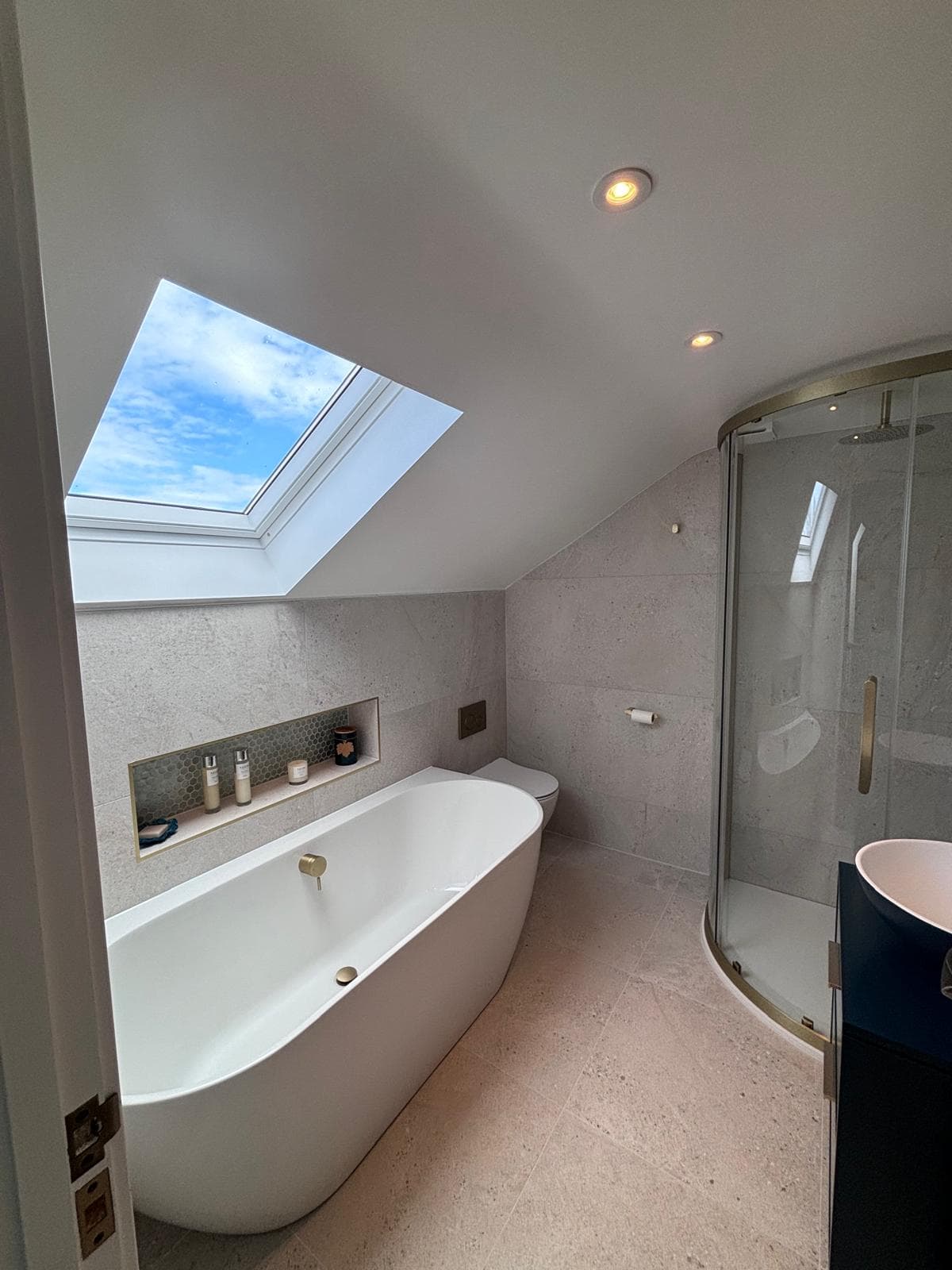
- En-suites. A well-placed en-suite makes a loft bedroom feel like a proper suite. Plan the soil pipe route early.
- Heating and ventilation. Lofts can run warm in summer, so ventilation and good insulation matter for year-round comfort.
Working with a local team
We are a family carpentry and building firm, and we know Christchurch and the surrounding area well. That local knowledge counts, from understanding the housing stock to knowing the coastal conditions and the way older roofs in the town are built.
If you want to see the full range of what we do with roof spaces, our loft conversions service page goes into more detail, and you can find out more about how we work across Christchurch too.
Ready to talk it through?
If you are considering a loft conversion in Christchurch, the best first step is a proper look at your roof so we can tell you honestly what is possible. We are happy to visit, assess the space and talk through your ideas with no pressure.
Get in touch through our contact page or call us on 07808 293854 and we will arrange a time to come and see your loft.