A garden room is one of the most flexible ways to add usable space to your home without the upheaval of a full extension. Over the years we have built garden rooms across Dorset and Hampshire for all sorts of uses, and the biggest lesson is this: the right garden room starts with being honest about how you will actually use it, not just how it looks in a brochure.
In this guide we walk through the main garden room ideas we get asked about, the practical decisions that matter, and how to make sure the finished building serves you for years rather than becoming an expensive shed.
Start With the Purpose, Not the Plan
Before you think about cladding or glazing, work out what the room is for. A garden room built for a single quiet home office needs very different insulation, wiring, and layout to one that doubles as a gym, a guest space, or a hobby room.
We always ask clients to picture a normal week in the room. How many hours will you spend in there? Will you use it in January as well as July? Do you need running water, or just power and heating? These answers shape every decision that follows.
Common uses we build for
- Home office or studio: quiet, well insulated, with good natural light and enough power for equipment.
- Gym or wellness space: a solid floor, ventilation, and often a bit more ceiling height.
- Hobby or craft room: generous storage, task lighting, and worktops built to fit.
- Guest room or teenage retreat: better insulation, sometimes a small cloakroom, and comfortable heating.
- Garden bar or entertaining space: wide opening doors and a layout that connects to the patio.
Getting the purpose clear early saves money and regret later, because the specification is built around real use rather than guesswork.
Insulation and Year-Round Comfort
The single biggest difference between a garden room you use all year and one that sits empty for half of it is insulation. A lightly built summerhouse is fine for warm months, but if you want a space that works in winter it needs to be built like a proper room.
That means insulated floors, walls, and roof, quality glazing, and a way to heat the space efficiently. In our damp coastal climate around Christchurch and the New Forest, good ventilation and a well sealed building envelope also stop condensation and keep the room healthy.
We build garden rooms with the same care we put into a house extension. Proper breathable membranes, insulation to a sensible standard, and detailing that keeps water out are what separate a lasting building from one that feels cold and tired within a few years.
Key takeaway: The purpose of the room decides the specification. Build for how you will really use it across all four seasons, and insulation is where that decision matters most.
Do You Need Planning Permission?
Many garden rooms fall under permitted development, which means you can build without a full planning application, but there are important limits. Height, position in relation to boundaries, and total footprint all matter, and the rules are stricter if the building is close to a boundary or if you live in a conservation area or the New Forest National Park.
If you plan to sleep in the room, add a bathroom, or use it as self contained accommodation, the rules change again and building regulations usually come into play. It is always worth checking early rather than assuming.
We help clients understand where they stand before any work begins, and if you want to read more about building without a full application, our guide to permitted development in Dorset explains the key allowances in plain terms.
Choosing the Right Position in Your Garden
Where you place a garden room affects how much you enjoy it. We often see people default to the far corner, but that is not always best.
Think about the sun. A room used mostly in the morning benefits from an east facing aspect, while an evening entertaining space works better facing west. Consider the view too, both from the room looking out and from the house looking towards it, because the building will be part of your garden every day.
Access matters more than people expect. A clear, well drained path means you will use the room in all weather rather than avoiding it when the grass is wet. We also look at drainage, existing tree roots, and how easy it is to run power and, if needed, water from the house.
Practical siting checks we run through
- Sunlight through the day and across the seasons
- Distance from boundaries and neighbours' windows
- Ground conditions and drainage
- Route for electrics and any plumbing
- The view from both the room and the main house
Materials and Finish
Garden rooms come in a huge range of styles, from crisp modern boxes with flat roofs to timber clad buildings that sit softly into a mature garden. The right choice depends on your home, your garden, and the look you want.
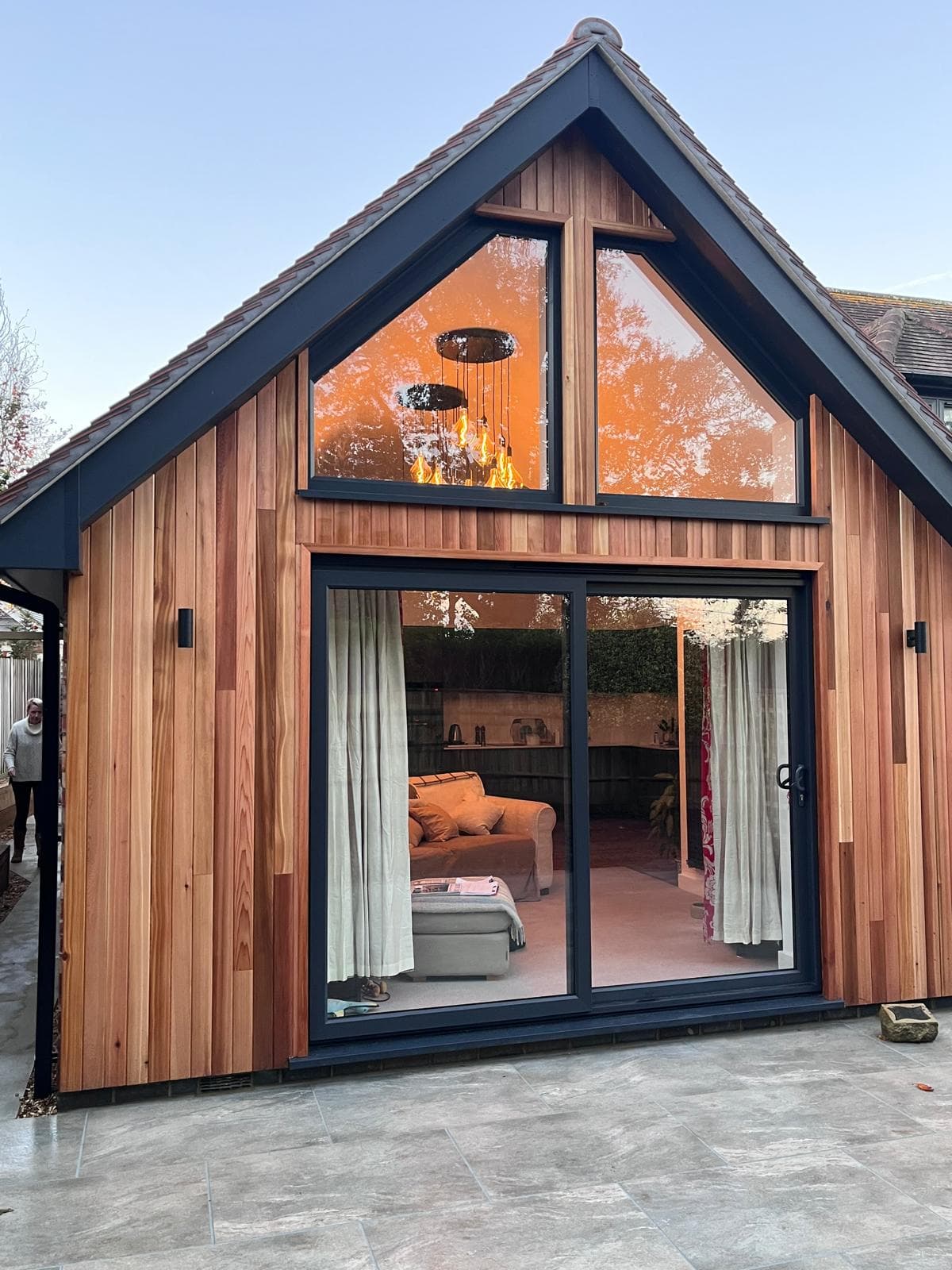
Timber cladding, such as cedar or thermally treated softwood, weathers beautifully and suits the rural feel of much of Dorset and Hampshire. Composite cladding offers a low maintenance alternative if you would rather not treat timber over the years. Roofing can be flat with a modern membrane or pitched to echo the main house.
As carpenters first and foremost, we pay particular attention to the joinery: the door and window reveals, the eaves detailing, and any built in storage or seating inside. Good carpentry is what makes a garden room feel like a considered part of your home rather than a kit dropped on the lawn.
Glazing, Doors, and Light
Natural light transforms a garden room. Large glazed doors connect the space to the garden and make even a modest footprint feel generous. Bi-fold and sliding doors are both popular, and each has strengths depending on how you want to use the opening and how much wall you want to keep for furniture.
Rooflights are another simple way to bring in light, particularly useful for offices and studios where you want brightness without glare on a screen. We often combine a large door opening on one side with high level glazing or rooflights to balance the light through the day.
Do not forget the practicalities: good glazing keeps heat in during winter and helps the room stay comfortable in summer. Blinds or a bit of overhang can prevent overheating on the sunniest days.
Power, Heating, and Connectivity
A garden room that is genuinely useful needs reliable services. At minimum that means a properly installed electrical supply with enough sockets and good lighting. For a home office, a solid internet connection is essential, whether by a hardwired link or a strong wireless setup.
For heating we usually recommend an efficient electric option such as a wall mounted heater or underfloor heating, sized to a well insulated building so running it is not a burden. If the room will include a cloakroom or kitchenette, plumbing and drainage need planning from the start rather than added as an afterthought.
Getting the Details Right
The difference between a good garden room and a great one is almost always in the details. Neat cable runs, well sealed junctions, sensible storage, and finishes that match how you live all add up. A room that is thought through feels calm and easy to use, and it keeps its value.
We build in and around Christchurch and across the wider region, and we treat every garden room as a proper building project with the same standards we apply to extensions and renovations. That approach is what makes the space something you reach for daily rather than something you outgrow in a year.
If you are still weighing up whether a garden room or a full extension suits you better, it is worth understanding both routes properly, and our team is happy to talk through the trade offs with no pressure.
Bringing It All Together
The best garden room ideas share one thing: they start with real life. Decide what the room is for, build it to be comfortable all year, put it in the right spot, and finish it with care. Do those four things and you will have a space that genuinely adds to how you live.
Whether you want a quiet office at the bottom of the garden, a bright studio, or a room for family and guests, we can help you plan and build it to last.
Ready to talk it through? Get in touch via our contact page or call us on 07808 293854 and we will help you choose the right garden room for your home.